2015-08-06
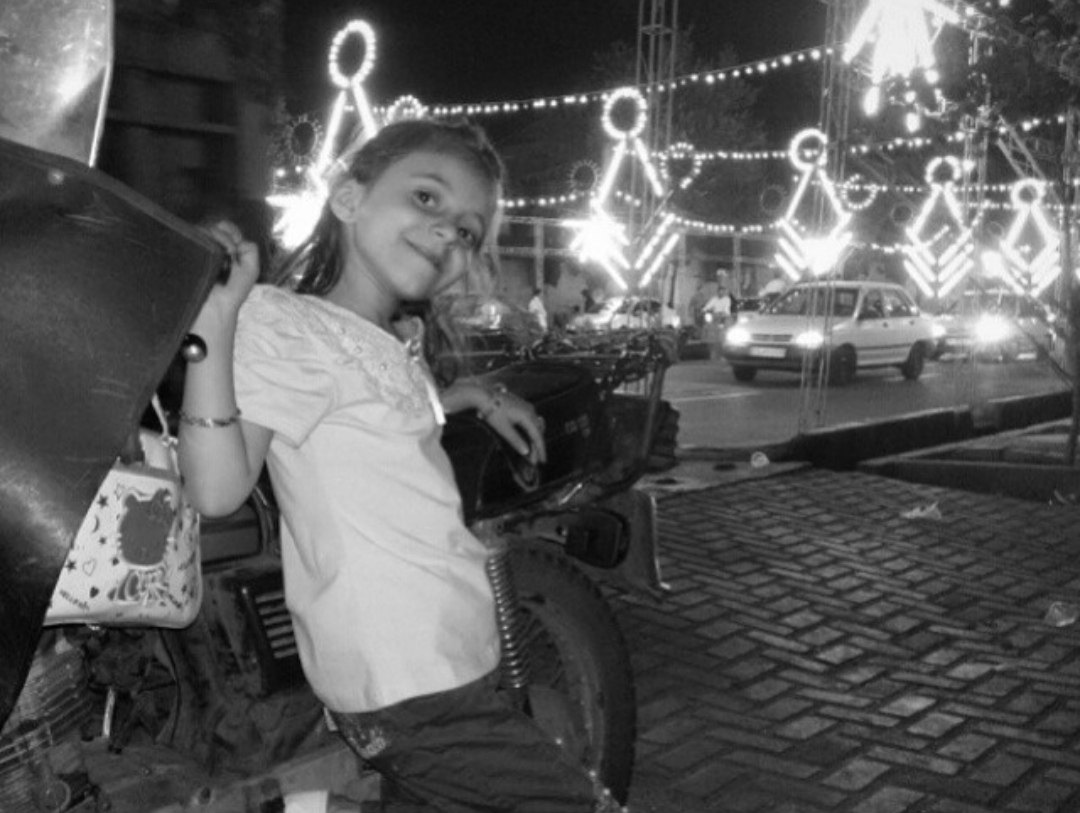
As usual, every week, when the temperature rises on Friday evening and the heat subsides a little, I line up all the members of the house and announce that they should get dressed and get ready to go out. As usual, it takes until dusk for this defeated army to get ready. Finally, a four-person tribe, dressed in their best, gets on the motorcycle with the Cheetah-like stripes. The girl sits on the tank, the boy sits behind me and their mother on the handlebars. I hang the girl's white patent leather bag with a picture of Kitty the cat and a few hearts on it from the handlebars of the motorcycle, and I hang the girl's Polish doll from the front bar of the motorcycle. The girl likes to have her doll in front of her eyes and talk to her and sing her poems and songs. The last time she talked to me on the motorcycle, I was distracted for a moment and we all went to the beans, after which the doll replaced me. The boy takes his cell phone out of his pocket and holds it out to make himself more comfortable, but I know that the burnt-out father is thinking about playing some stupid, boring songs. The mother of the family is counting the seconds so that we can get going quickly and get a little further away from the alley and the place so that she can take off her veil. The veil is a symbol of hijab and chastity, but it is cumbersome on a motorbike. What is hidden from you? The last time we were riding a motorbike with a veil, it got caught in the spokes and we fell down. For a few weeks after that, one of our pastimes was picking at the dried wounds on our hands and feet. Out of respect for Haj Agha (my father), whose house we have lived on one of the floors for years, he never leaves the house without a veil - which in his father's eyes is the only standard for observing hijab - that's why we have to count the seconds and alleys one by one to get away from my father's boundaries.
On the way back from Mellat Park, which filled our leisure time this week, I am standing at the red light at the Niayesh intersection, waiting for the green light. The little girl, tired of playing, doesn't even feel like talking to her doll anymore. The boy's phone is out of charge, and the mother of the family is still sitting on the porch, counting her regrets in her mind, and I...
I think about how, after thirty-odd years since the revolution and my father's ideals, my city of Tehran, which was a revolutionary city and a symbol of resistance, martyrdom, and revolutionary values, suddenly changed its face in a few years to a modern, identityless Tehran with symbols of capitalism. Why did the city of men who were greedy, zealous, and principled turn into a city of men who were arrogant? When did the people of my city realize that they would be more successful in life if they were not themselves and wore a veil over their faces? Where did we get here? Could the Westernized Nasser al-Din Shah, who laid the first foundations of modern Tehran, even in his dreams see that Tehran would one day become like this? What happened when we/they realized that the plane trees on Vali Asr Street, in addition to the water of the Alborz Mountains and the clean soil of Tehran, need to be illuminated by fixed, multi-colored LEDs from below. Most importantly, why is my neighborhood outside the circle of this modern Tehran? Why should the only park and green space in my neighborhood be the one that His Highness the Cursed Prince built in the name of his cub, the Crown Prince, and the only service the mayors of Tehran can do to this park is to change its name to "Vali Asr". Why should I put this defeated army on this Zaghart motorcycle and take them across the city under the pretext of having fun in a pleasant atmosphere. In my neighborhood, there is a woofer of hearts, who is responsible for its not sticking?
I constantly grumble in my mind that I suddenly remember the pumpkins and eggplants of Mr. Mehdi's bar today, our neighbor across the street, who used to play with a loudspeaker in the morning to gather local customers around his van and sell, and again in my mind I begin to fairly divide Mr. Mehdi's burden between the city officials and managers. I don't know why the melons that were left under the load ended up with the mayor.
With these vain thoughts, I'm busy counting the seconds at the red light when a black SUV brakes next to me. I turn my head towards it, I see the buttocks of a 27-28 year old young man touching his mouth. I continue my gaze up and see his smiling face. The young man up there is smiling and staring at my family. He is happy to see my little girl's doll and flower bag hanging in front of the motorbike and is counting people from head to toe. With a look of delight, it's as if he has seen a new and strange subject. He calls the young girl sitting next to him to watch us. Now they both smile at us together and wave and kiss the little girl. But I, indifferent, turn my gaze back to the traffic light and think about where they have gone. Haven't they ever seen a four-wheel drive motorcycle in this city that they are so surprised?
The light turns green and we move. Just a hundred meters ahead, water has gathered on the street. I slow down so that the water from under the motorcycle doesn't splash onto our feet and clothes, so that we don't get wet and muddy, but the same black SUV, without paying attention to its side, quickly passes over the water on the street, and a rain of dirty and muddy water falls on our heads.
From here on, there is no story to write because it is dirty, it is polluted, it fogs up the mirrors. The important thing is that I find the answers to all the questions in my mind right now.
The common pain of all of us squatters is forgetfulness... forgetfulness... forgetfulness... forgetfulness...