2018-05-19
We have the last lunch before Ramadan in my office kitchen with six colleagues around a table of four. Eating lunch in our office’s classic kitchen is not just about satisfying hunger, but also a joyful and passionate ritual, full of literary, cultural and artistic dialogue and exchanges. Today we talked about the mourning and ritual methods of the Lor people, the Lors of Khuzestan Province. It started with the visions and hearings of our southern colleagues and ended with the memory of our Azeri colleague “Roshan”.
A story about Roshan’s first appearance at a Ta’ziyeh gathering with his mother. The Ta’ziyeh singers performed a play about one of the commanders of Karbala with their own songs, and the women and men in the audience cried loudly and shed tears, beating their heads and chests. Seeing these scenes, Roshan realized that he had to cry for something or someone, like the other listeners. The more and more carefully he listens to the Ta'ziyyah and the sounds, the less he finds anything to cry about. He emits all kinds of sounds, such as sobs, long and continuous moans, and even cries and tears, but not a single tear is shed. Roshan's efforts and efforts to cry in childhood are the subject of our laughter at the dinner table today, so much so that we feel like we are being teased.
At the end of the story, his mother tells him: My son, there are many people like you here, perhaps they are not able to shed tears and truly cry over the tragedies of Karbala and they do not have any connection with the Ta'ziyyah and the singers of the songs, they are forced to cry for their own pains, wounds, sufferings and troubles.
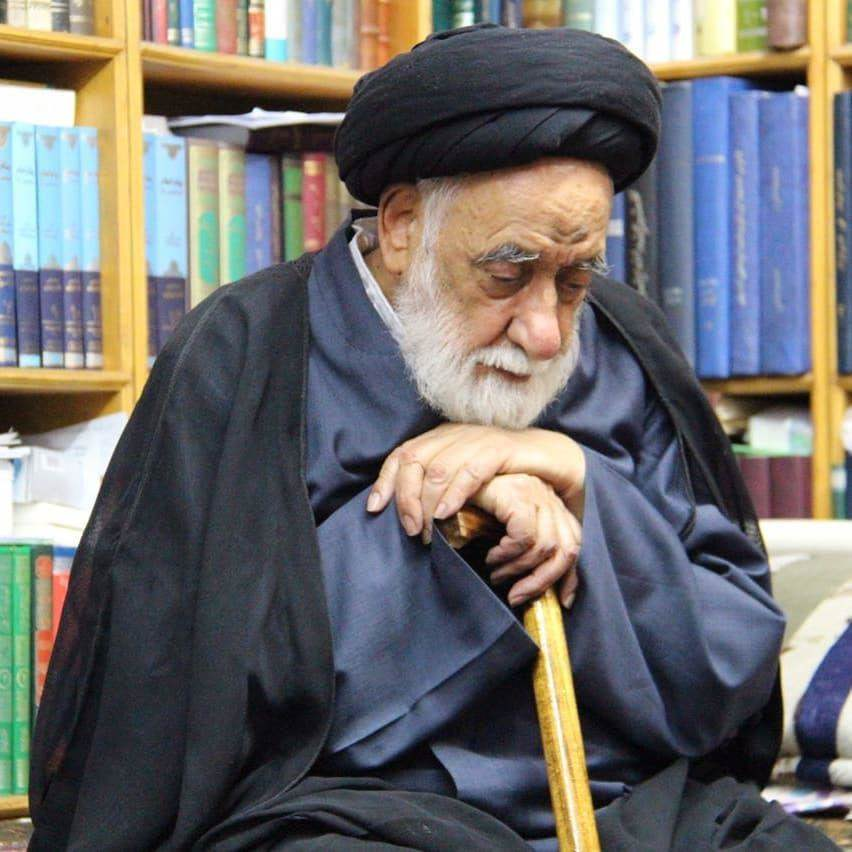
It was the first day of Ramadan, the breaking of the fast, when I came across the news of the passing of Agha Sayyid Mehdi Tabataba'i. Seyyed Khorasani, who was the pride of our neighborhood, Khorasan Square, and lived on Ghiasi Street (Ayatollah Saeidi). I will go through his political background and activities for Iran and the revolution and I will be thrown back in time to my childhood years, the time when I went to a religious ritual meeting with my father for the first time in Muharram. An old and noble group whose banner was called the Tehran Clothing Merchants' Guild. Before the poets, reciters, and singers, a tall cleric in a black turban went up to the wooden pulpit in the corner of the Husseiniyeh. He had a sweet Mashhad accent. The content of his pulpit was a lesson in morality, but the end was tied to Ashura and mentioning the tragedies of Karbala. My first acquaintance with Asad Mehdi Tabatabaei was there. He was reciting the rosary and he himself was crying over his words, and I, without the slightest effort, shed tears watching his condition and hearing his words. It was as if no one was present in the assembly except him and me, and he arranged the words just for me. He recited the events and stories of Karbala to me simply, fluently, and eloquently, as if everything was happening before my eyes.
Ever since I heard the news of Asad Mehdi Tabatabaei’s passing, his pleasant and luminous face has not faded from my sight for a moment.
I remember the days when I would go to Hosseiniyeh solely for the truth and purity of his words, and I would express my needs with his breath and words.
I remember the nights when he would call local pickup truck drivers on a mission to distribute food to the needy and underprivileged on the outskirts of Tehran.
I remember his advice to those who were seeking practical mysticism, and he always had a prescription for young people seeking knowledge: Work...work...work.
I remember his house, whose door was always open. A house where no one ever left empty-handed. From the young job seeker to the scholar seeking knowledge. A house that was the connecting link for many great people, from left and right-wing politicians to artists, marketers, the poor and the rich, academics, etc.
Some people have been created dear, pleasant, and influential. It is as if dignity and honor were gifted to them from the bottom of their hearts. Mr. Seyyed Mehdi Tabatabaei was one of these people. He was one of the pillars and secure supports of Tehran. Without a doubt, Tehran will lack something after him.
To be honest, I really wanted to have a funny memory of my first appearance at a religious ceremony, and I envy Roshan for this, but I am happy that I learned the value and value of tears with Mr. Seyyed Mehdi Tabatabaei.
May your soul rest in peace, sir.